Coastal Surveillance – The Connectivity Imperative

Coastal Surveillance – The Connectivity Imperative

Coastal Security Starts with Connectivity

In today’s congested, contested, and infrastructure-degraded littoral environments, resilient, high-capacity communications are mission-critical. From maritime domain awareness and search-and-rescue to counter-narcotics, IUU fishing, and disaster response, coast guard forces need uninterrupted command, control, ISR sharing, and coalition interoperability—without sacrificing platform space, power, or signature management.

As coastal surveillance systems fuse radar, AIS, EO/IR, and analytics into a common operating picture, the communications backbone increasingly relies on multi-orbit SATCOM—combining GEO for persistence, LEO for low-latency ISR, and MEO/HEO for added diversity. Modern missions unfold in environments where RF congestion, spoofing, jamming, and intermittent connectivity threaten operational success —making resilience not optional, but operational.

Challenges in Modern Operations

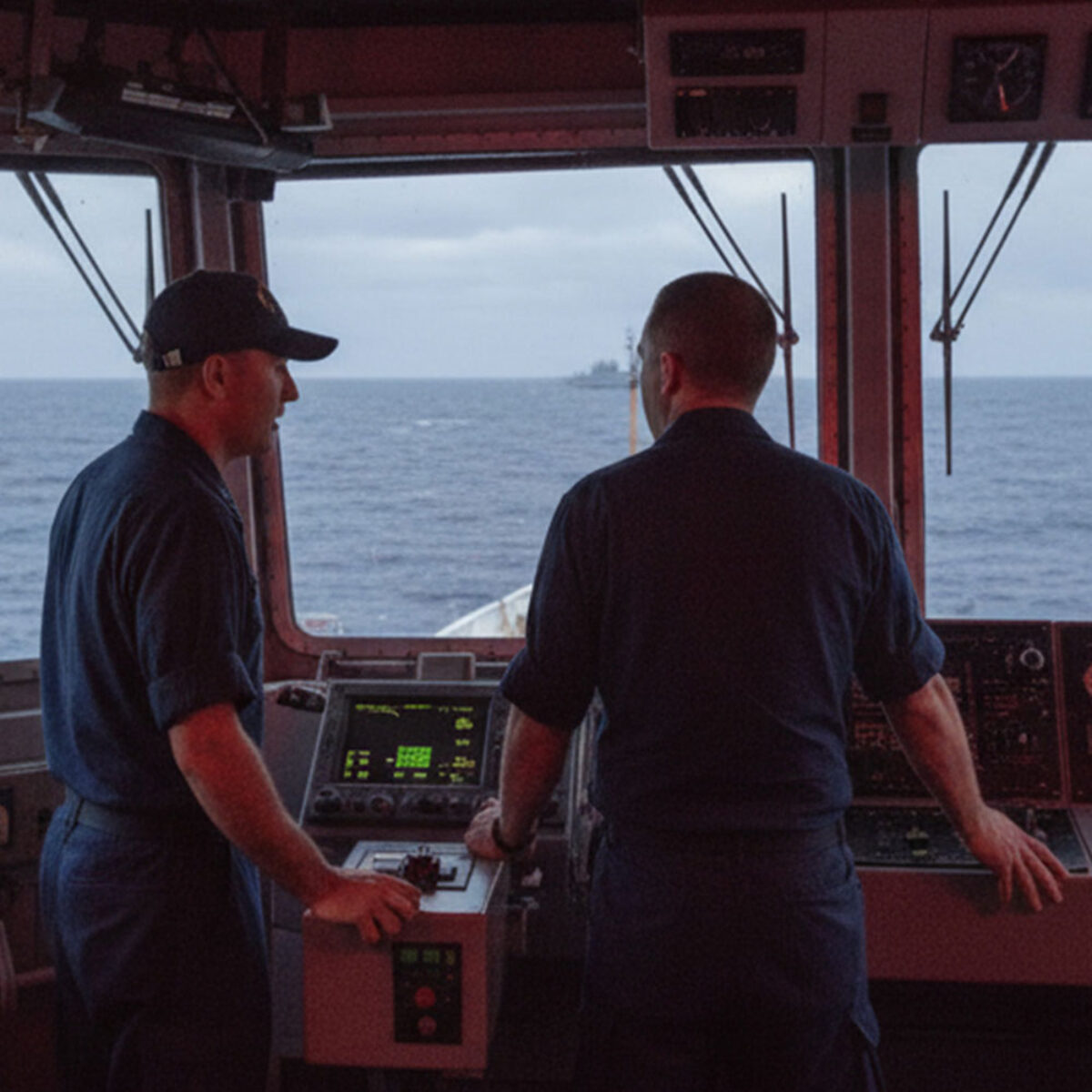
Contested Electromagnetic & Cyber Domains
Jamming, spoofing, and cyber intrusions degrade link availability, reduce throughput, and increase latency—slowing decision cycles and risking mission execution in electronic attack conditions

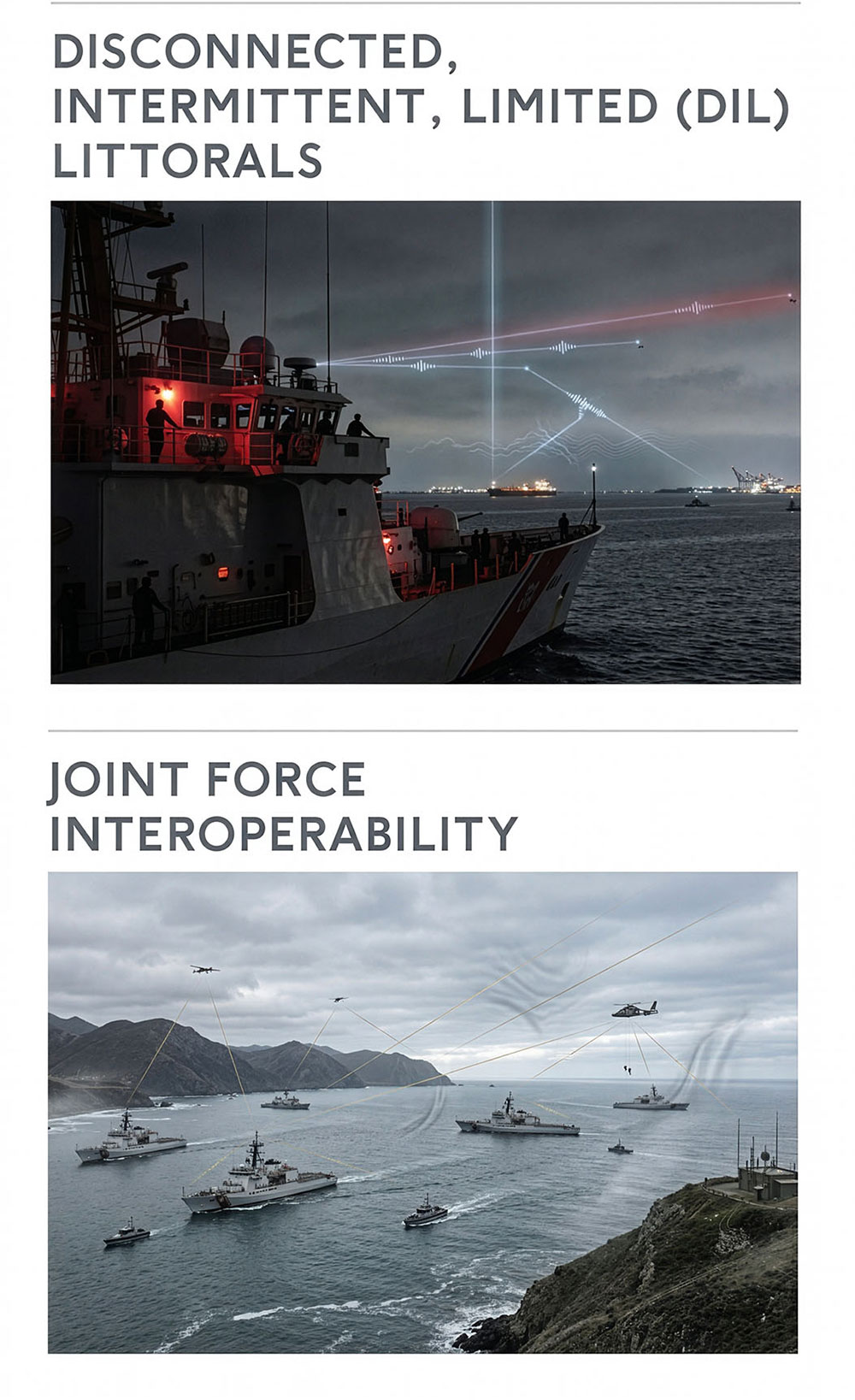
Disconnected, Intermittent, Limited (DIL) Littorals
Near-shore operations contend with LOS constraints, multipath, terrain/urban masking, and degraded infrastructure. Backhaul is often intermittent, and weather/sea state can further degrade SATCOM performance.

Platform SWaP & Topside Clutter
Small cutters, patrol craft, and RHIBs face stringent space, weight, and power constraints. Crowded masts and superstructures complicate aperture placement, and cable runs introduce loss and EMI risk, while moving parts reduce reliability in harsh maritime environments.

Coalition Interoperability
Mixed platforms, waveforms, and protection standards across USCG, NATO, and partners complicate plug-and-play communications. Aligning on protocol profiles, crypto/keying, and certification paths is essential for joint operations.

GNSS Denied Navigation
Spoofing, jamming, urban canyons, and ionospheric effects degrade PNT integrity. Operations require resilient alternatives that can use non-GNSS signals and multi-satellite observations when GNSS is unavailable or untrusted.

Challenges in Modern Operations – ALL.SPACE

The Solution: One Terminal. Any Orbit. Total Resilience.

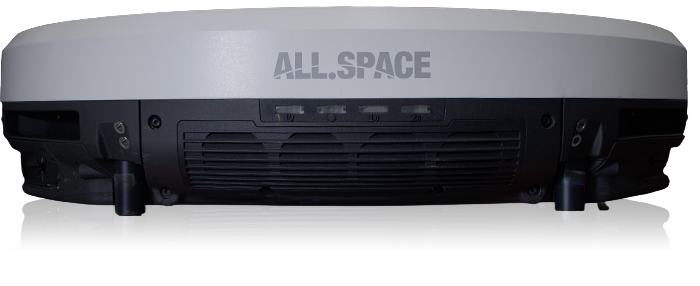
Hydra 2 redefines coastal communications as the backbone of mission continuity—delivering multi-orbit connectivity, advanced signal processing, and coalition-ready interoperability in a single, ruggedized, low-profile SATCOM terminal.

Purpose-built for contested, congested, and connectivity-challenged environments, its integrated architecture combines resilience, adaptability, and interoperability without compromising space, power, or stealth:

ALL.SPACE

Multi-Orbit, Multi-Link Resilience
Two concurrent full-duplex Ka-band links enable parallel operations—e.g., GEO/HEO for strategic C2 and LEO/MEO for low-latency ISR—with make-before-break handovers and zero packet loss across all orbits.

Optical Digital Beamforming
Rapid adaptive beam steering mitigates interference and maintains throughput in contested environments.

RF over Fiber Integration
Securely route RF below deck with minimal loss, reduce EMI, centralize encryption and switching, and simplify cabling—critical for compact cutters and shore stations.

Coordinated Multi Terminal Operations
(Planned) Synchronized apertures overcome blockage from masts or superstructure and increase aggregate throughput—ideal for larger cutters or shore sites.

Alt PNT via Signals of Opportunity
(In Development) TDoA/AoA/Doppler-based navigation resilience in GNSS-denied conditions, supporting SAR and covert interdiction missions.

Allied Interoperability
Software-defined, network- and modem-agnostic, built for seamless coalition integration.

Ruggedized, Low Profile Form Factor
MIL-STD-oriented, no moving parts—optimized for cutters, patrol craft, RHIBs, and austere shore stations.

Operational Context

Hydra in Action: Coastal Surveillance Task Force Scenarios

U.S. Coast Guard Sector Southeast: Counter Narcotics & Migrant Safety

Scenario 1

HM Coastguard (UK): Multi-Agency SAR & Disaster Response

Scenario 2

Norwegian Coast Guard (Kystvakten): Arctic MDA & Fisheries Enforcement

Scenario 3

Scenario 1

Challenge:
High-tempo interdictions and SAR in congested coastal waters require uninterrupted C2 with Sector Command and low-latency ISR feeds from unmanned vessels and air assets, despite RF congestion and occasional jamming.

Solution:
Hydra maintains Link 1 (GEO) for persistent command/coordination and Link 2 (LEO/MEO) for real-time ISR and boarding team comms. If ISR is jammed, digital beamforming shifts traffic to the alternate orbit while C2 remains on GEO (once Ka-band LEO systems are fully operational).

Result:
Continuous operational awareness, faster case prosecution, and safer SAR/interdiction outcomes—even under electronic attack.

Scenario 2

Challenge:
Severe storms disable terrestrial networks; SAR coordination among helicopters, lifeboats, and shore stations requires resilient comms and centralized encryption with minimal topside clutter.

Solution:
RFoF links Hydra’s topside terminal to below-deck systems for secure processing and provides dual Ka-band links to national HQ and airborne ISR.

Result:
Rapid restoration of multi-agency communications, high-bandwidth ISR sharing, and accelerated rescue operations in infrastructure-denied conditions.

Scenario 2

Challenge:
Vast littorals with intermittent coverage and GNSS degradation from space weather or interference.

Solution:
Hydra enables layered connectivity (GEO/HEO for persistent reporting; LEO/MEO for ISR) and planned Alt-PNT via SoOP for navigation assurance when GNSS is unreliable.

Result:
Reliable patrol coordination, continuous vessel tracking and imagery, and resilient navigation for cutters and unmanned vessel detachments.

Italian Guardia Costiera: Port Security & IUU Fishing Deterrence

Scenario 4

Joint NATO Coastal Network: Baltic & North Sea Interoperability

Scenario 5

Scenario 4

Challenge:
Dense urban coastlines and port approaches where line-of-sight relays are impractical and RF congestion is high.

Solution:
Hydra’s low-profile, no-moving-parts terminal fits small patrol craft; simultaneous dual-link supports encrypted C2 and low-latency ISR from drones, with make-before-break handovers across orbital layers (LEO/MEO).

Result:
Reliable patrol coordination, continuous vessel tracking and imagery, and resilient navigation for cutters and unmanned vessel detachments.

Scenario 5

Challenge:
Mixed fleets and shore sites require common connectivity despite diverse modems and standards.

Solution:
Network- and modem-agnostic Hydra enables secure partner-to-partner links and automatically reroutes traffic when primary paths degrade.

Result:
Coalition situational awareness is maintained, and shared ISR and alerts flow uninterrupted across national boundaries.

Mission Success Assured For Coastal Surveillance

To dominate dynamic littoral environments, Coast Guard forces require resilient, scalable SATCOM that keeps C2 and ISR flowing—despite interference, congestion, or infrastructure loss.

Hydra Delivers:

Decisive C2 Superiority
Real-time command continuity in RF-congested, jammed, or infrastructure-denied littoral environments.

ISR Velocity
Low-latency feeds from unmanned vessels, air assets, and shore-based sensors; uninterrupted tasking during make-before-break handovers.

Coalition Integration
Seamless data sharing among USCG, NATO, and allied partners via network- and modem-agnostic interoperability.

Multi-Orbit Resilience
Adaptive performance across LEO/MEO/GEO/HEO with zero packet loss during transitions.

Compact Maritime Integration
Fits small platforms without major retrofits; reduces topside signature and EMI via RF-over-Fiber.

Hydra 2

The single terminal delivering assured coastal surveillance—multi-orbit resilience, uninterrupted C2/ISR, and seamless coalition integration.

Case Study Download Form

This field is for validation purposes and should be left unchanged.
Name(Required)

ALL.SPACE used to be called Isotropic Systems at www.isotropicsystems.com.
We changed our name on 1 August 2022 but are the same legal entity.